Service ≠ Subservience

So impressions of the UK since returning from the Windy City – rain, gray, rain, misery, rain, poor customer service, rain.

OK, so the rain is a given, but it’s the striking difference between the US and UK on customer service that has really struck me. Since being back for just over one month now I have been told by a waitress that she only has “one pair of hands”, been served by a girl in Halfords who said not one word to me, made no eye contact and dealt with my purchase with her feet resting on her desk the whole time and been made to feel plain stupid by London Underground staff, when my ticket wouldn’t let me through the barrier, by just staring at in me looking exasperated.

I was also lectured by a conductor in front of lots of other passengers because I had no ticket – reason being that the ticket machine on my station was vandalised and other travellers clearly had season tickets. That was nice at 6.30 in the morning. Thanks Capital Connect.

These experiences have been punctuated by one or two great ones, namely at the checkout in M&S, who remembered just what sandwich I’d bought a couple of days earlier!

But overall, the experience has been rotten.

I do get the impression that the people delivering this dire level of interaction (to call it service would be quite wrong), have a chip on their shoulder. It smells of a ‘them’ and ‘us’ mentality, perhaps borne out of the old British class system that was refreshingly missing in the US. Whilst there, not once did anyone ask me what school I’d gone to, or ‘what line of country’ my father was in!

So here’s the thing, the level of service I experienced and came to expect in the US I feel was a result of the absence of inverse snobbery. In fact there was a real respect for those providing service. I remember the first time I rode the train and hearing the passengers call the guard “Sir”. By the time I left I was doing the same. It was natural. Customers knew that their waiter wasn’t a servant, but a hugely important part of their experience.

And they tipped well!

As I’ve written many times before in this blog, social media now gives a louder voice to those who want to challenge the level of service they have received. Complaints online are amplified through social channels and provide the complainer with a barrier to hide behind that saves them from a real confrontation (something we Brits shudder at the thought of), meaning that their true feelings come out.

The enlightened companies are listening to these voices through the SMM tools such as SM2 or Radian 6, and are engaging with customers to turn things around, listening to the issues that people are facing and using this information to develop products and services into markets with greater confidence.

The adoption of these techniques combined with more of a focus on customer service generally – thank you (Mary Portas and Michel Roux), hopefully mean brands are upping their game in this crucial area.

To serve someone doesn’t mean being an inferior or subservient, but that you are sharing something about which you are passionate, whether that be a product, food or a ride on a train!

Overdoing It?

This is a question more than anything.

Do you think that in an effort to be helpful to the point of removing the need to move a muscle, some developers are creating products simply because they can rather than down to a really identifiable demand in the market?

I’m talking about apps such as Boxcar and Brizzly. These well intentioned little apps that sit on a tablet or smartphone consolidate all our messages into one place. Every message we receive from Facebook, Twitter, Linkedin – you name it, oh and of course our normal email accounts too, are lumped into one place and an alert is sent to us to let us know we have something. You can set up rules so that you aren’t overrun by spam and just get sent the stuff you want.

All sounds marvellous – super simple.

But something is worrying me about these. By making things SO simple because we can, what are we gaining? I don’t find it hard to look at email, Facebook, Twitter etc etc, separately but have test driven these messaging clients out of curiosity. I find my self impressed, but left a little cold. In fact I’ve now signed up for several, but still go back to the original – old school!

As I said, this is a question. Does anyone else feel the same way?

Reports of the Death of TV are Greatly Exaggerated

Despite the seemingly inexorable rise of online as means for brands to reach out to and engage directly with customers, a report from Advertising Age shows that whilst this is true for western countries, traditional print and broadcast media are growing fast in the world’s emerging economies.

Here’s a quick take of some of the findings:

1. TV is still a necessity – more so than ever in poorer countries.

2. We are watching more TV, not less despite the growth of internet access.

3. But what we watch is changing – more soccer and American Idol type shows – more than a third of the population of Afghanistan tune in regularly to ‘Afghan Star’!

4. Facebook continues to crush its online competitors.

5. ‘Cofficing’ – operating in cyber cafes, is the way people in developing countries are accessing the web.

6. Brazil, Russia, China, India and Indonesia are the most avid viewers of online video.

7. And these same people are accessing online content through mobile devices.

8. The spread of iPads and other tablets will continue to dominate.

9. Despite circulations declining for printed media in the west, they are growing in the developing world.

Whilst this blog is concerned primarily with social media and how business can win on the social web, I’m particularly delighted that TV isn’t dying. In fact having lived in the US for the last two years I can say that the quality of programming is higher than I ever thought or expected. American TV was a standing joke in the UK – “57 channels and nothing on” sang Bruce in 1992, but the quality of HBO’s output such as Boardwalk Empire and others like House and best of all, MadMen mean the bar is being raised in terms of quality.

However, advertisers need to continue to recognise that these audiences also want to engage with brands on their own turf – and that is to be found online.

LinkedIn – Is It Becoming A Bear Pit And A Beauty Pageant For The Ugly?

This is a post I’ve been meaning to write for a while. I’ve been feeling more and more turned off by LinkedIn.

Like most people I spent time carefully building my profile, seeking recommendations from former colleagues and joining groups relevant to marketing, social media and emerging technologies. But it is within these groups that I have observed a disturbing and growing trend.

Whilst my membership of many of these groups in the early days involved joining in with discussions, trying to answer questions and on occasion initiating discussions, most recently I have taken more of a backseat and become more an occasional observer

So why the change? Well, the trend that I have seen develop recently and rapidly in a number of groups is a nasty little habit amongst the members to snipe at each other. All done very politely of course and almost in the tradition of British Parliamentary debate (“I respect the views of the Rt. Hon. Member, but he is an idiot”)

Now lively debate and discussion is very healthy of course. In the days before social media, the letters pages of the marketing press would be filled with the same level of argument that others could contribute to by writing to the editor. But the ease of typing a throw away line into a group discussion means that a shooting from the hip attitude seems to have grown and the result doesn’t reflect well on those with a smoking gun.

What makes this worse is that I’ve seen these sniping, one-upmanship comments appearing in discussions initiated by people asking a very simple question. For example, in one group recently a member simply asked “How can I grow my number of Twitter followers?” After a few initial answers that were all quite fine, a huge argument broke out between two people over something barely related to the question! Of course, the person who quite innocently asked the question in the first place will have been bombarded with LinkedIn emails every time these two people piped up with a snipe and could quite possibly have viewed it as spam!

So, my view of LinkedIn has changed considerably recently. I’m not a fan of this trend of trying to prove that you know more than anyone else. Couple this with the trend to overtly promote your own companies wares (forbidden by most group rules, but roundly ignored) and I’m seeing LinkedIn as cross between a bear pit and a beauty pageant for the ugly!

Or have I got this all wrong?

iPhone on Verizon

Just a quick post, but I’ve just noticed that Verizon are today due to announce the much rumoured partnership with Apple and the launch of the Verizon iPhone. For many of my former colleagues and friends in the US, this will be marvellous news as they will be able to break free from AT&T.

And as one who has just landed back in the UK and bought an iPhone on the 3 network – one of five available options – I can only say what a great step forward this will be.

As ever, to have a choice in most matters is fabulous.

Starbucks Ready To Unbrand Itself

I hear that Starbucks are to drop the words ‘Starbucks Coffee’ from their logo, leaving only the bare-breasted Siren – the Greek mythical creature who lured sailors to their death, to ‘come out of the circle’, according to Howard Schultz, Chairman and CEO.

I think this is a big step for Starbucks. There have been a number of disastrous logo changes, most notably the complete about face of Gap after a well organised social media campaign forced the retailer to revert to the original blue box logo.

But Starbucks aren’t changing so much as removing words, and this is the significant factor.

They are now undoubtedly a global superbrand and have reached the point where words simply aren’t necessary – the siren is enough to indicate to people that this is a Starbucks – in fact the image is stronger without the words. In the same way Apple, McDonalds, Shell and Nike are instantly recognisable by their wordless logos, Starbucks are attempting to break into the area of ‘do I really need to say who we are?’ and are sure to succeed.

There has been some negative feedback from people across the social web to this news, but I will put my neck out and say that I think this move will prove successful for Starbucks and that in the near future, malls and high streets will begin to look everso slightly different.

Nearly half of all Twitter users don’t read a word you say – that many?

Here’s an article I came across, bizarrely enough, on Twitter the other day. I’m not sure where the author has gathered the information, the source isn’t quoted, but it makes the claim that although the number of people subscribing to Twitter continues to grow inexorably, those who ‘use’ the site are relatively small in number.

The headline says is it all – Half Twitter users don’t read a word you say.

So what?

If you imagine that Twitter is another channel to push your message out to your audience, then of course that message will continue to be mistrusted. That’s not engagement. Remember, the key to winning on the social web is to listen and then to engage.

I continue to see company Facebook pages that don’t allow people to post messages. Is the expectation that people are just waiting to hear what they have to say like the sermon on the mount?

Twitter and Facebook can only really be called ‘social’ media if they facilitate conversations and discussions between brands and their customers and prospects. Those who follow a brand on Twitter are doing so for a variety of reasons, to wait for discounts, find out when the next store is opening etc etc. But more and more, these people are going to have questions. When is the next offer? When is the store opening in my neighbourhood? And they will ask these questions and expect answers – quickly. Those people will be listening to what you say becasue you’ll be saying it to them directly.

That’s the real power of social media.


Happy? None Of Your Business!

This ISN’T a political blog. It really isn’t – I have to say that straight off before you read further.

OK? Good.

I am a dyed in the wool direct marketer, taught to measure everything, a firm believer in “what gets’ measured, gets improved”. This is so true in the world of social media activity and if anybody tells you that you cannot measure ROI of social media activity, punch them on the nose, or at the very least, show them the door.

Social media activity can indeed be measured in terms of ROI, but the ‘I’ really needs to stand for involvement, rather than ‘investment’.

But I heard the other week that the UK Government is to spend £2m on measuring the nations ‘happiness’.

Apart from this being a dreadful waste of money at a time when cuts are being made into every area of public spending, I have to ask, just what business is it of a government, how happy I am?

It’s none of their ******* business!

I’m sorry, but this seems like the tentacles of government spreading further and further into our private lives.

Now I ‘m a huge fan of Kevin Roberts, the charismatic CEO of Saatchi & Saatchi Worldwide and his blog post just reached my inbox, in which he supports this move. So I find myself at complete odds with Kevin for the first time.

I sense my libertarian instincts suddenly being roused by this announcement. I’m sure I won’t be directly affected by it, and doubt I’d miss the effect on my taxes of the spending, but the principle that a government wants to find out how happy I am is ridiculous at best, sinister at worst.

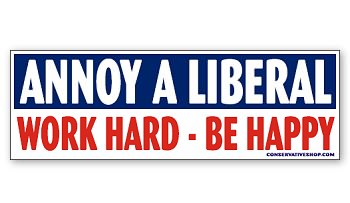
For the record, if government got out of the way, removed red tape, repealed the overwhelming health and safety legislation, cut corporation taxes and just let people get on with their lives, then happiness would spread organically –  As the bumper sticker says “Work Hard – Be Happy!”

But I don’t want to annoy anyone, let alone a small ‘l’ liberal like me.

Am I out of sync?

Groupon and Google – Maybe Not!

Not so fast Google. Those upstarts from Chicago turned down a reported $5.3bn bid from Google last week.

They surely can’t think that they were under valued? Which leads one to think that another suitor maybe ready to step in. Who could that be?

Answers on a postcard – or a comment below!

The Future is Here!

Check out this video from Accenture. It shows thoughts of experts in field of cloud computing – their explanation of just how this new concept works is highly eloquent and cuts through much of the clutter around this subject you may have read about.

Oh, one thing. These experts are ten years old. They know nothing else. They can’t remember a time before the internet. They are your key influencers of the very near future.