Yahoo! – The Death of a Search Engine

I heard the news today – Oh Boy!

It seems that west coast the fault lines running through Yahoo! are opening up once more. The news today is that three more top executives are due to resign.

Reading this, I’d forgotten about the failed takeover by Microsoft a few years ago, but it seems that Carol Bartz, the CEO who replaced Jerry Yang, to ‘clean up’ and restore  Yahoo! to greatness, after that failed attempt, is now presiding over a sinking ship.

I recall a great article I read a month or so ago by Paul Graham who detailed meeting founder Jerry Yang to discuss a new model for online advertising. The model they discussed was essentially the PPC model we know today, but at the time of the meeting, online ad revenues were being generated by banners and CPM deals. Advertisers were still living in the twentieth century and impressions were king. As this new model looked like giving advertisers much more visibility of the power of their ad dollars, Yang ran for the hills, preferring instead to sit on his throne of banners and skyscrapers.

Of course we all know who eventually saw the potential of the new model and now who cleans up!

Does anyone use Yahoo!? It’s a serious question. I know they went on an acquisition trail, picking up Flickr, Kelkoo and Delicious, so yes we probably use Yahoo! to access these services – but do you use Yahoo! for email, or even (sshhhh) search?

Paul Graham talks of there being no ‘hacker’ culture at Yahoo! Which was in complete contrast to the other silicon valley companies at the time. Instead, Yahoo! had an old fashioned approach towards its employees. Clock in, clock out.

Back in the day, there was Compuserve, Alta Vista, Yahoo! and then a odd one called Google. Whilst others have gone by the wayside, it’s a shame to hear of Yahoo’s seemingly imminent demise. But you reap what you sow I suppose.
The Social Egosystem

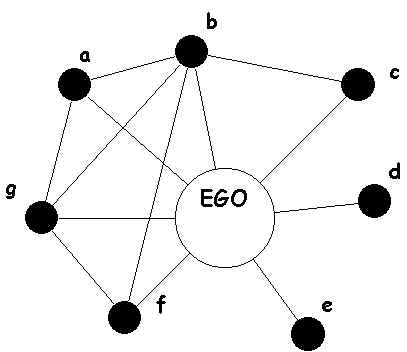
This article by Brian Solis, paints a fascinating picture.

He echos much of what I have written about here previously in relation to our ‘me’ brands and the narcissism of today’s consumers.

What’s clear is the need for brands to identify their biggest potential influencers. It’s summed up best by this quote “Brands seeking reach, presence, and connectivity must look beyond popularity and focus on aligning with the influential beacons who serve as the hubs for contextual networks or nicheworks.”
But what really permeates throughout this article is the firm belief, which I share, that actions by brands, via social tools, can indeed be measured and deliver an ROI that brands will expect in the future.

I know from my own experience, when an agency sits and squirms at the suggestion that their funky viral project should carry an element of measurement, it’s the first sign you should run away. And when they say that a calculation of  ROI cannot even be attempted, show them the door.

The refinement of Twitter will, allowing better profiling based on keywords, history and other variables means that this microblog could well become the dominant force of the social web. The launch of new Twitter indicates that they are developing more ways to keep users on the Twitter site itself and away from various third paty ‘clients’. Combine this with their growing ability to analyse user data and in turn what that means they can offer advertisers and you can see where this is going.

I’ve read recently more and more complaints about Facebook and its user interface. The constant changes are becoming an annoyance. When people become more familiar with new Twitter’s ability to show images, video and sound, the reasons we have for spending time on Facebook may decline

In the week that “The Social Network” is released, Zuckerberg surely needs to get his team to raise their game back at the ranch and avoid the red carpet?

What do you think?

Facebook Down

Mark this:

September 23rd 2010

Update 1   1:40PDT: The site is back up for some, if not all, users.

Update 2  1:50PDT: Many users are getting an error message Service Unavailable – DNS Failure. The message is coming from a server at edgesuite.net which is run by Akamai, a provider for many big sites. It looks as if Facebook has changed their DNS to point to this server while they work on the problem.

Just as Mark Zuckerberg appears on Oprah! Conspiracy theories will abound.

Astonishing! Just how this is news. How I’m even bothering to write about it.

So I’ll stop. I feel slightly unclean. As I did after watching ‘Couples Retreat’.

iPad Sales Set to Outstrip iMac Sales in 2011

Anyone who doubts that the dominant platform for accessing the internet in the future is going to be the iPad should read this.

Sales are now forecast to outstrip the sales of Macs themselves in 2011. But the interesting phrase here is “Mac for the masses”. The Mac v PC debate is an old one, but the introduction of this new hardware into the market, partly smoothing the edges of carrying a laptop around, while at the same time offering the best experience of surfing the web, raises the stakes.

Why carry a laptop around when an iPad can do everything it does? Couple this with computing in the ‘cloud’ and the size of the hard drive becomes less important. The iPad gives people a great taste of just what computing on a Mac means.

The iPad is of course also now responsible for the growth in the number of mobile applications, many of which now give people a better online experience than a traditional website.

While plenty of PC users bought and became advocates of the iPhone, it was still a phone – something that the desktop PC wasn’t interested in competing with. But the iPad moves into its territory. It’s also much more affordable than a laptop.

But of course Apple will be sure to release iPad 2.0 sometime soon. It will iron out many of the teething troubles of the original – but will it work with flash? Will it have a camera and USB ports?

Before becoming one of those contributing to the sales of iPad next year, you may want to wait.

But then what about iPad 3.0?

A Shout Out for the Good Guys

Without realising it, certain habits have crept their way in to my daily routine recently.

I’ve become an avid follower of several blogs and news sites that give my day its kick start.

So here’s a list of the top five that I follow without fail (almost). I’d love to know yours.

1. Chris Brogan – I heard Chris speak in Chicago back in June this year and his words on ‘human business’ cut through all the guff that I’d heard and read about before. Thanks Chris for all your posts.

2. Alltop – fairly new to this, but a great consoldator of the best of that’s out there every day.

3. Mashable – Goes without saying. I’m sure everyone’s go to site for all things social, marketing, etc.

4. Techcrunch – For an untecchie like me, they make this befuddling world of widgets and apps wholly relevant.

5. Brian Solis – Along with Chris, a great thinker and one who has fully explained the reality of engagement.

The lesson here overall I suppose is that reading is king. You can’t really read enough. Everything changes so quickly and randomly, at least trying to keep abreast is an objective we should all have.

Are we too soft?

Just recently I’m feeling myself becoming more and more frustrated with those who are laying their feelings bare on Facebook. I see status updates like “sad”, or “why is it always me?”

My feeling around this kind of soul baring is this – where’s your dignity?

Maybe it’s an old fashioned view. Maybe the world did change the day Diana died and a mass outpouring of grief flooded the UK, but I’m still of the old school I think.

I just feel that those posting these status updates are just begging for a response. And those who respond, do so in the knowledge that their response is public and they are seen to care more than others.

For really personal feelings, I just think people ought to talk directly to friends rather than reach out publicly for sympathy and reaction. Harps back to Stan Rapp’s comment about the narcissism of todays consumer.

It’s just the way I am and was brought up I suppose.

Am I out of whack on this one?

Financial Services and Social Media

After some investigation into the area of the use of social media by those companies governed by the FSA (Financial Services Authority), it is heartening to see that such a heavily regulated industry has some fairly light rules that its members are asked to observe.

Whether this refreshing lightness of touch is down to the firm belief amongst those in the FSA, that by its very nature social media is more volatile than traditional media channels and so needs less guidelines, or whether it’s down to a lack of understanding of the potential pitfalls and opportunities, I’m not sure. But I have my suspicions.

Nevertheless, it would appear that a two page pdf is enough to guide its members at this stage.

It is interesting however that the FSA guidlelines are entitled “Financial Promotions using New Media”.

Why first pick “Promotions”? Surely because the authors assume that this is another push channel for its members. In fact the opening section states, “We have produced this update following a review into the media channels that firms use to communicate financial promotions to customers. In particular, a shift towrds the use of ‘new media’ has been noted”

It sounds like the warnings that parents of teenagers heard in the fifties, when warned of the dangers of this new music called ‘rock ‘n’ roll’!

They do suggest guidelines for “Non-promotional communications”, which quite rightly state that communciations be “..fair, clear and not misleading”.

Finally there is a section called “What should you consider before using new media?”

  • New media may date more quickly than traditional • media channels, so regular reviews to ensure that information is up-to-date may be required.
  • It is important to consider whether this channel is a • suitable method for the type of communication. For example, Twitter limits the number of characters that can be used, which may be insufficient to provide balanced and sufficient information.
  • It is important to consider whether the risk • information could be displayed prominently and clearly using this media channel.
  • Promotions and communications made using new media must meet the requirements for
    stand-alone compliance.

So remember that Twitter can only handle 140 characters! “There will be no dancing in the aisles”!

It seems that as long as companies follow the current guidleines they’re covered. But the lack of detail is revealing.

What’s even more surprising is what’s not covered.

There is nothing here about blogs and Facebook pages that will solicit third party content. Nothing about staff training and supervision on using social media tools, nothing about SMS or chat rooms and nothing about the role of  agents of companies governed by the FSA.

By comparison FINRA, the US equivalent of the FSA, have published a lengthy report, also aimed at helping its members.

So, I’m beginning to feel as though the FSA is acting a  little like rabbits in the headlights and perhaps hoping this will all go away.

But guess what?

Interestingly FINRA has a blog, several Twitter accounts and a Facebook page.

The FSA doesn’t.

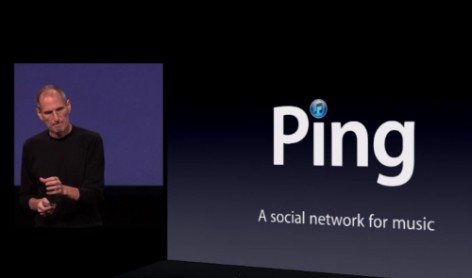
Ping

I downloaded Apple’s iTunes 10 last night, with its new logo and funky new features, the most talked about of which, and the one I was looking forward to investigating the most, being Ping.

Ping is Apple’s ‘social network for music’.

“Now your music is more social. Join the conversation, and follow your favorite artists and find out what your friends are listening to with iTunes Ping”

“Follow your favourite artists and be part of their inner circle”.

“See what kind of music your friends and friends-to-be are into. Then follow them with a click.”

“Check out who your friends are following and who’s following them right back.”

“See what your friends are listening to, who they’re talking about, and what your favorite artists are up to — all on one page.”

I don’t get it.

None of this sounds in any way of interest to me. I don’t want to know what my friends are listening to. I’m not bothered about letting them know what I’m listening to. They don’t care.

Isn’t that the point about music? It’s so personal.

The quotes above all sound as though they could have been written for the Bay City Rollers Fan Club members on an ad in ‘Look In’ magazine circa 1973.

Maybe that’s it! Ping could work for 12 year old Justin Bieber fans – but is that the demographic being targeted here by Apple? As they are also selling film rentals, I doubt it.

Maybe I’m completely wrong, but Ping sounds to me like Apple trying to shoehorn a square peg into a round hole. “We have to get in on this social thing. Come back to me some ideas”.

It’s not a natural fit in anyway.

If I was minded to tell my friends what I was listening to (Billy Bragg and Wilco’s Mermaid Avenue), I’ll do it on this blog thank you very much. Not that you care. I promise I’ll never tell you what I’m listening to again.

Am I completely wrong?

Tell me what you think.

The New Twitter – New and Improved?

Yesterday, the head honchos at Twitter invited a select group to a presentation of the new Twitter.com offering people a faster, but crucially a much richer experience.

Here’s the official line.

Over the next week, they will be inviting you to use the new version on your own Twitter page. So what’s new about it?

Firstly and most strikingly is the format of the new design. The right hand side of the page now accommodates any media elements that were before a click away. So if somebody tweets a video clip or picture, you can now see this without leaving the page. You can also now see the origin of a tweet by clicking an icon that opens up the thread. The threads to direct messages are now also going to be visible.

Additionally, you will now be able to see a greater amount of information about those tweeting.

To make way for this new functionality, Twitter have taken back a large amount of the background. So in future, you will need to sharpen up on your profile biography, the content of your tweets themselves and worry less about your wallpaper imagery.

Just why they have felt it necessary to launch new Twitter, is surely a response to the rise of various Twitter clients – Seesmic, Hootesuite, Tweetdeck etc. etc. They are now trying to keep us at Twitter.com by taking the best of the functionality that these clients offered and appending it to the main site.

And why would they be doing this?

To offer advertisers the amount of impressions necessary to attract the big bucks.

Indeed, co-founder Biz Stone said, the new Twitter opens up “new revenue-generating opportunities.” Well, 90 million tweets a day can’t be ignored.

Here is Twitter’s publicity video for the new format.

I think it all looks pretty cool and I can’t wait to use it myself.

I would love to know your thoughts on the new look and your opinions on the reasons behind the change.

Panic In Detroit

Not so much a panic as an exodus, but David Bowie didn’t write that song!

New Orleans had Katrina, New York 9/11. Both awful events, one natural, one the result of actions by mad, sad deluded men. Both, quite rightly, attracting huge levels of sympathy from across the globe. But in the Midwest, Detroit has experienced, and continues to experience a silent, more lingering and perhaps more permanent act of destruction.

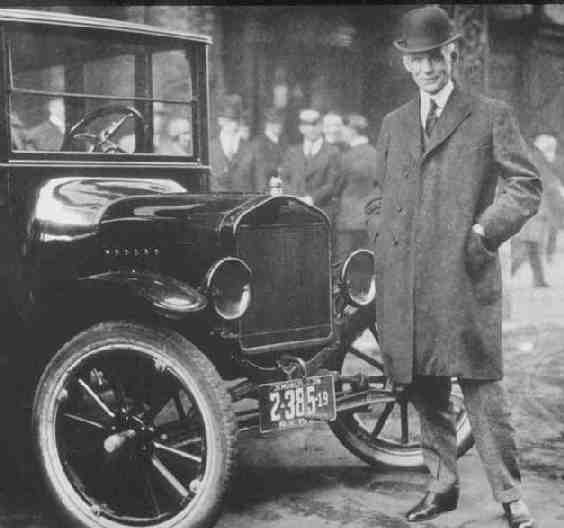
There is now no rush hour in Detroit.

A city built for 2 million is the home for around 800,000. The decline of the motor industry which was responsible for the city’s greatness, means that hundreds of thousands have abandoned it, leaving it to the mercy of criminals and now back to nature itself.

Former well off neighbourhoods are becoming overgrown with trees and greenery, to a point where and an urban prairie is growing on the shores of Lake Erie. Detroit now resembles a post apocalyptic landscape. The town where Stevie Wonder, Diana Ross, The Four Tops and so many other artists from Motown flourished, is dying.

Although Detroit is the largest casualty of this depression, other cities – Pittsburgh and Cleveland (cruelly known as, ‘The Mistake on the Lake’) are suffering badly also.

In his documentary, Requiem for Detroit, British producer and director, Julian Temple, gets to the heart of what was allowed to happen here. It’s a chilling tale, but one I believe needs to be seen and understood on a far wider scale.

As I’ve now learnt, there’s traditionally no love lost between Chicago and Detroit. But in the week that Richard Daley announced he wouldn’t be seeking re-election as Mayor of of the city for a sixth term, I think Chicagoans have plenty to thank him for in developing his city into a beautiful 21st century example of what can be achieved and saving it from the fate of Detroit.