Google To Buy Groupon

News has been filtering through all week that Google is to acquire the online discounter, Groupon for $5.3bn. That’s BILLION!

This would make the dela the second biggest in corporate history. So the quote of Michael Gambon from the Layer Cake, “the art of good business is to be a good middle man”, may be born out in spectacular fashion.

Groupon’s model is based on offering discounts off a retailers products or service, typically over 50%, if enough people sign up for the offer, the discount is triggered and Groupon takes half of the value of the discount – in this example 25%.

What started as a way of independent retailers offering discounts to their local marketplace, took off in huge style earlier this year when Gap offered a 25% off discount through Groupon.

No doubt Google see the addition of Groupon to its armoury as a way to combat the development of Facebook Deals who are growing closer and closer to Microsoft and to position themselves on the front of the grid in the world of social commerce.

But is Groupon the right choice? What is Groupon? It’s not a technology company, it’s a discounter that uses email (and not selectively at that!) to promote its wares. As email comes under threat from tools such as Facebook messaging, is this the wisest path to follow?

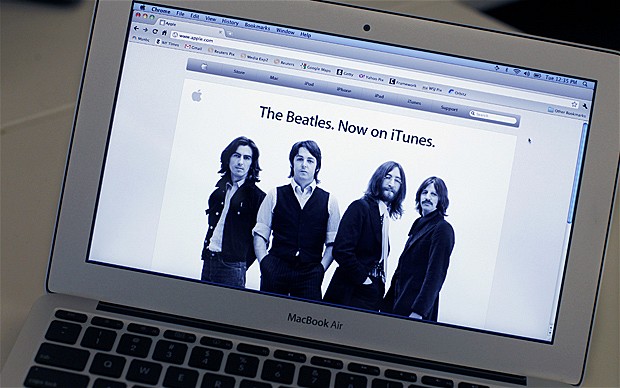
The Beatles Sell 2m Songs on iTunes – From Social Media, not Search!

This is fascinating and a wake up call to those who doubt the future of social commerce.

The following  are excerpts from an article on Danny Sullivan’s Search Engine land blog

Billboard magazine reports that The Beatles sold more than two million individual songs worldwide and in excess of 450,000 albums in its first week on Apple’s iTunes Music Store. (The Beatles’ catalog was added to iTunes on November 16th.)

According to Experian Hitwise, it was social media — not search — that drove a lot of the online interest and, more importantly, the online traffic surrounding The Beatles addition to iTunes. Consider this stat: On November 16, the first day Beatles songs were available on iTunes, 26% of UK traffic to Apple.com came from social media, about double the amount that came from search.

And Hitwise says Apple received a “huge spike” in UK traffic coming specifically from Facebook. The week prior to The Beatles launch on iTunes, Apple was the 86th most popular outbound destination from Facebook; after the launch, it jumped up to the 20th most popular. Hitwise says that one in every 200 web site visits that left Facebook went straight to Apple’s web site.

To an extent this demonstrates that you reep what you sew – sew what? (sorry). Certainly the blogosphere was buzzing with word that,  according to Apple, “Tomorrow will be a day you’ll never forget” the day before the announcement that iTunes was to offer Beatles songs. But the fact that Apple chose to seed this information on social media so heavily shows just how important this movement is going to be in the future?

What is the long term future for search marketing given the consolidation of social and search functionality between Facebook and Microsoft in apparent alliance against Google?

The First Question

I read a wonderful blog post from Oliver Blanchard this week with a list of points on social media. It’s brilliance is that it states the ‘bleedin’ obvious’ as they say in the UK!

The first point is the clearest – “Social is something you are, not something you do.”

Of course! – This gets straight to the point I make to businesses at the earliest opportunity – accept that the world, and your role in it, has changed irrevocably.

So, the first question to ask of a business owner is not “do you ‘do’ social media? But “are you social?”

Alterian’s Alchemy – Turning Data Into Gold


So, as promised a more thorough review of the new product from Alterian – Alchemy.

A description from the company themselves – “Alchemy is a lot of things”, so let’s break these down.

Firstly let’s explore the principles behind it. Alchemy is designed to change the way business engages with customers online and offline. Having recognized a fundamental shift in the marketing now has to be conducted, predominantly due to the impact of social media, Alterian ahs been on the acquisition trail over the last few years, buying up content management systems and most notably, the social media monitoring tool, SM2, designed by Techrigy.

Alchemy is also recognition that the existing campaign management tools available are now no longer fit for purpose in the new world.

The first thing to note is that Alchemy has been designed with the end user (a marketer, not a technician) very much in mind. To this end, Alterian have brought in a User Experience Engineer, Colin Robertson to oversee the design of Alchemy, to ensure that a user friendly interface was achieved. Indeed, Alterian sum up this approach by stating that, “the user should know what they’re doing, not how they’re doing it”. At last!

Three specific areas underpin Alchemy:

  • Technology
  • Usability
  • New Concepts

Technology – this is brand new technology, not a series of enhancements to existing technologies. Alchemy works on desktops, in browsers, on PC’s or on a Mac in a way that makes no difference to the user.

Usability – Colour schemes have been devised to help the users fell comfortable with where they are at anytime. Specific colours are used to indicate the following parts of this product – segments, campaigns, engineering data, reports, design, tactics and question sheets.

Training in the use of Alchemy should be shorter and easier.

New concepts – Campaign tools that are accessible to the ‘non-power’ user.

But, what’s under the bonnet?

The building blocks of Alchemy are data and tools. As Alterian say, ‘data is the object, tools are the subject’.

So to start, a marker would typically look to create a data segment. The drag and drop feature is fabulous from a  user point of view, but also great is that as you add criteria to your selections, the volume of data that you are creating changes and is visible to you, so you don’t have to wait to hit ‘submit’ get disappointed and start again. So you can pull, females, born in August who, given their transactional history, are likely to purchase within the next three months online, all through the drag and drop functionality.

The other stand out feature for me is Alchemy’s integration of social media into the overall campaign management system. Essentially, once a campaign becomes live, Alchemy listens to the ‘buzz’ that it is creating on social media and can respond to this buzz, based on a series of events and triggers.

An ‘event’, is defined as anything that is brought in from the outside – for example a ‘tweet’ or a blog post. Once an event happens, a ‘triggers’ can be set up to occur – an email campaign, direct mail piece of tweet for example.

The ‘Engagement Persona ID’ ties together all the information known about a customer and be used to personalise elements of a campaign in a particularly impressive way. The example that Alterian use is a campaign that offers a 15% discount to anyone who tweets a particular hashtag. Assuming all permissions are granted, Alchemy then captures the Twitter handles of all those who have done so, then tweets them back with a link to a url that takes them to a personalized website, promoting products that are likely to stimulate a purchase.

Alchemy appears to be a great, user friendly tool, which draws together the increasingly disparate actions available to customers in 2011. This is a huge achievement in itself, but in giving the marketer a simple and straightforward user interface, it makes brings down the barriers that are present in some systems, so that maximum value can be extracted and all of the features can be used without fear.

Alchemy from Alterian

I watched a presentation by Mike Talbot, Alterian’s CTO on Thursday, of his new baby – Alchemy.

I have to say I was blown away.

I often talk here about tools just being tools. What’s important is how these tools are used and in my mind they are far more effective when they are simple to use.

Alchemy seems to offer marketers a super simple way of managing everything. It provides the means of making the new marketing work.

Having talked recently about marketing being broken, with the customer now truly in control, Alchemy draws together all of the disparate threads of a consumers behaviour to create a real time, individually crafted strategy for each individual based on trigger points.

For example and at a very simple level, by promoting the tweet of a hashtag by customers, Alchemy can automatically reply to that customer with a unique url, which takes the customer to a personalised website experience based on all the data held about that customer.

Along with Right Now’s CX product, the tools are now available for marketers to respond dynamically to customer behaviour and support a customer engagement plan.

A more detailed review of Alchemy will follow.

Freedom of Speech

I can honesty say that I have never felt that anything I have written, could ever have wound me up in trouble. Never occurs to me – why would it?

A difference of opinion has been the most contentious thing that this blog has ever generated.

And so reading today of the release of Egyptian Abdul Kareem Nabeel Suleiman, believed to have been imprisoned for longer than anyone else because of the contents of a blog, is both a reason be happy and grateful.

Here’s more information about Kareem’s case, filmed earlier this year.

A Dose of Reality – From Me to You

On Monday, the Apple website stated that “tomorrow will be a day you never forget”. The blogosphere could barely contain itself (guilty!) as we contemplated just what this could mean!

To add to the excitement, Zuckerburg was unveling the details of Project Titan, not being the ‘GMail killer’ that had been whispered about.

In the end, Project Titan left me feeling slightly confused, while the Apple announcement concerned the launch of The Beatles back catalogue on iTunes.

The latter felt a little like a let down too. But of course to everyone else, this was a big deal. A dose of reality, like a cold bucket of water served to illustrate the importance of not getting too sucked in to our own little world.

But do people still BUY music??

Facebook Messaging

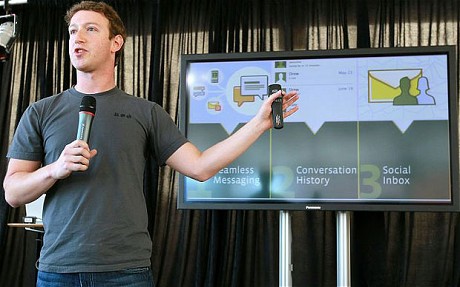
Yesterday I sat and watched  Mark Zuckerburg and Andrew Bosworth announce the trial of the new Facebook messaging system.

I am left with two conflicting thoughts and so am slightly troubled.

Firstly, the words and phrases they used to describe the new system sounded great ; “immediate”, “personal”, “simple”, ‘minimal”, “short” and best of all, “technology getting out of the way”!

But then watching the demonstration and hearing how it would work with outside clients (including Gmail!), left me quite befuddled! By no means am I a tecchie, which was why the language was so appealing. So expecting to then see a super simple to understand product, I felt slightly let down and confused.

I get the objective – to consolidate all your online conversations with people into one stream (including SMS). The analogy used by Bosworth was his Grandmother’s box of letters sent to her by his Grandfather that she lovingly cherishes – “where’s my box of letters?” he said.

The announcement had been teed up in the press as a Gmail killer and when Zuckerberg claimed ‘Gmail is a really great product”, I was left waiting for the ‘but’, which never came. Even after hearing that “Email is still really important to a lot of people”, I could sense that by people he meant ” sad old people”, but then what we heard was that users of this new product could claim an @facebook.com email address!

Search Engine Land’s comment, “Whatever-you-do-don’t-call-it-email-but-hey-here’s-a-Facebook-email-address-for-you email and messaging system”, raised a smile!

I do get the fact that for a lot of people email is outmoded. My wife says she has “emailed” someone, when what she means is that she has sent them a message on Facebook, so it’s not just the college kids he met, who Zuckerberg claims were the inspiration behind this product, who don’t use email because it’s too slow and informal.

But I remain unclear as to just what has been created here. Over a year in development, commanding more internal resource than Facebook have ever committed to a project before, this is clearly seen by them as a gamechanger.

If it really is simple, easy, short, personal etc etc and really does get the technology out of the way, then I can’t wait. (I’ve applied for an invite to test this thing, so will report if lucky enough to be granted one), but right now I just can’t picture it.

Can you help me shed some light on this?

Seeing the World Differently

I was sent this amazing video of a speech given by Sir Ken Robinson just last week. Sir Ken is (as his Wikipedia entry says) ‘an author, speaker and international advisor on education in the arts to government, non-profits, education and arts bodies.’

I confess I’ve not heard him speak before, although since researching him know that he has spoken at TED events previously.

This is a remarkable speech in terms of clearly laying out the historical context of how accepted practices of educating children in the west have developed, but also just how dangerous these same conventions, such as ‘batching children based on their date of manufacture’, are. In fact, they could be dangerous and succeed in essentially educating all creativity out of children.

It’s a great example of seeing the world differently. just because a convention is so entrenched doesn’t make it right or immune from challenge.

If you are a parent, you really must see this.

You may find yourself hungry to change the status quo immediately to protect your own offspring from well meaning, but ultimately, outdated practices that anaesthetise childrens minds to drive out all of the ‘genius’ level creativity that we are all born with.

 
I would love to know your thoughts.


Losing Our Senses

I heard a fabulous interview with a mini hero of mine this week. James May was on the Richard Bacon Show talking about his new BBC series – Manlab.

Still being based in the US means I haven’t seen Manlab yet – don’t pay the licence fee, so can’t get iPlayer and won’t buy a Slingbox, but James was discussing the premise of the programme being to show the lost skills of what used to mean, being a man.

He discussed hanging wallpaper, cleaning spark plugs and mixing concrete – (all of which I have done I’m proud to say) as being basic skills that are now in danger of being lost due to a computer dependent generation. Why put up a shelf yourself when you can call ‘a man’ to do it for you?

Without passing judgement on the lazy, good for nothing generation Y, I was more taken by a phrase that James used when describing Sat Nav.

One of the tasks he undertakes in Manlab is to navigate the English Channel armed with just charts. He made a very good remark about Sir Francis Drake having a Sat Nav aboard The Golden Hind, before saying this – “you cannot bequeath your whole life and all your senses to the machine”.

So Captian Slow sums up beautifully a feeling that I have tried to express in this blog previously. For all the technical brilliance of smartphones, tablets, apps, widgets, social media monitoring tools, etc. etc. at the end of the day they are just tools! Tools used by people – human beings. Irrational human beings with high expectations of service levels and product quality. Having a Facebook page a Twitter account and a whistles and bells CRM system means nothing if the people responsible for them think that the tools in themselves will solve all of their problems.

Human beings are the key. As Best Buy say to their Twelpforce “Be smart, be respectful, be human!”

So if you think technology alone can get you out of the social media jungle unscathed, then forget it and go home.

Do you agree?